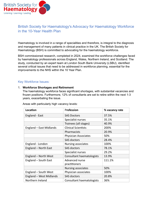

Engaging with consultations, policy proposals and developments that affect the haematology community is a key part of our advocacy work. Drawing on evidence, clinical expertise and member insight, we help to ensure that haematology is represented in key decisions
BSH has submitted a response to the APPG on Sickle Cell and Thalassaemia inquiry into sickle cell and thalassaemia service improvement. Our response draws on insights from eight consultant haematologists, specialist nurses and clinical leads working in haemoglobinopathy services across Leeds, London and the South East. In our response we have called for continued investment, national leadership and workforce development. (October 2026)
BSH notes the government’s commitment in the King’s Speech to modernising the NHS through the proposed the NHS Modernisation Bill. While the creation of a Single Patient Record has the potential to support safer, more joined‑up care by improving how clinicians access and share patient information across services, as many organisations have highlighted, strong safeguards around data use, privacy, and transparency will be essential to maintaining public and clinician confidence.
The Bill includes significant reforms to NHS leadership and governance, such as the abolition of NHS England, changes to Integrated Care Boards, and greater powers for the Secretary of State. We are mindful of the concerns expressed by several organisations about the implications of centralisation, and the NHS in England being focused on reorganisation when much needs to be done in addressing workforce capacity and enhancing patient outcomes.
The Bill also proposes changes to the patient safety and regulatory landscape, including reforms involving the Care Quality Commission and national quality structures, and we will follow further detail closely.
BSH will review the legislation and its implementation as it develops. We hope this parliamentary session will also deliver progress on the Government’s wider healthcare commitments, including publication of a credible long‑term workforce strategy with sustained investment in the haematology workforce.
The Royal College of Pathologists' (RCPath) Workforce Strategy 2025-2028 is pivotal in highlighting the critical challenges facing the healthcare system.
This strategy amplifies our commitment to advocate for the haematology workforce. BSH commissioned a comprehensive research study investigating workforce challenges across England, Wales, Northern Ireland, and Scotland. Conducted by London South Bank University it identified several critical issues that we believe are being addressed in the aims of the RCPath workforce strategy.
The publication of RCPath’s strategy is an important step towards addressing the challenges being faced by our health workforce. Haematology is a key component of this - integral to the diagnosis and management of patients across various specialities in the UK. A sustainable workforce is essential for patient care.
We welcome the RCPath strategy and its alignment to BSH's study recommendations, including implementing recruitment and retention mechanisms, accurately recording unseen activities, recognising emotional labour, investing in professional development, and modernising workforce planning. We look forward to collaborating with the Royal College of Pathologists to support the haematology workforce and improve patient outcomes across the UK.
We commend the extensive work of Channel 4’s FactCheck team and reiterate their concerns about the woeful extent of registered nurse shortages across oncology and haematology wards.
Their findings, that a third of hospitals studied were missing at least 10 per cent of their planned nurses across haematology wards, are compounded by what BSH has identified in our own haematology workforce research last year. While haematology is undoubtedly affected by staffing deficiencies, our study also showed further nuances – with issues around retirement, vacancies, retention and the increased pursuit of flexible, part time working.
One in four nurse consultants (22%) and one in 12 specialist nurses (8%) plan to retire in the next three years. This is exacerbated by regional imbalances, with 66.7% of Specialist Nurses in the South East, 43.5% of Consultant Nurses in the South West, and 50% of Advanced Nurse practitioners in the North West planning to retire in the next 3 years.
We recommend that this should be addressed by several measures including:
-
Improvements to the working environment which would increase retention within the specialty.
-
Development of a workforce development line for those close to retirement, with a focus on training, to increase retention of staff near or at retirement age.
-
Workforce planning with a flexible, part time workforce in mind.
- Support for national initiatives improving the distribution of training to meet population needs across the country.
We look forward to the forthcoming NHS 10-Year Plan, along with subsequent update to the Long-Term Workforce Plan, and hope that they will recognise the needs identified in these findings.
The publication of the National Cancer Plan for England marks a significant step forward for haematology, moving beyond a traditional solid tumour focus to better reflect the realities of blood cancers. We also welcome the commitments to reduce emergency diagnoses of rare cancers, improve data through the Get Data Out programme, expand community-based care, and maintain investment in genomic testing and CAR-T therapy.
However, successful delivery will depend on workforce capacity. We must address the severe pressures on the wider haematology workforce, particularly biomedical scientists and laboratory teams who underpin diagnosis, and liaison services that remain largely 'invisible' in current data. The forthcoming 10-Year Workforce Plan must align with these ambitions and tackle recruitment and retention across haematology and pathology.
We will continue working with our partners to ensure these commitments are delivered effectively for haematology and the patients and professionals who rely on it.
BSH responded to the Scottish Government’s consultation on managing health at work, drawing on our 2024 research with London South Bank University into the wellbeing of the haematology multidisciplinary team. While we welcomed the policy's recognition of workplace stress, we noted it fails to specify what sanctions should apply if an employer or manager doesn't ensure action taken is effective — without this, the policy risks being toothless and merely paying lip service to remediation. We also called for greater acknowledgement of systemic stress drivers, such as staff shortages and post-pandemic backlogs, and for stronger consideration of how stress intersects with equality, diversity and inclusion.