
“A continued focus on the haematology workforce is essential to delivering the best care for patients. This is as valid now, if not more so, than when we first started our workforce project.”
Dr Josh Wright
Past BSH President and founder of The Workforce Project
The Haematology Workforce
- The Workforce Project
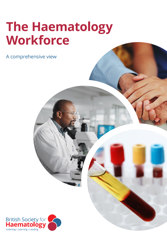
In early 2025, we completed a major research project carried out in collaboration with world-leading researchers at London South Bank University (LSBU) to investigate the current state of the haematology workforce, the wellbeing of the multidisciplinary team and how good practice can help the issues facing our workforce. This is the most comprehensive study to be undertaken of the whole haematology workforce in the UK.
Discover more in our full report
- Liaison Haematology

Arising from the workforce research was the significance of skilled labour provided ‘ad hoc’, such as consultations and advice, being rarely accounted for in workforce planning and often failing to attract organisational support. ‘Liaison haematology’ is the workload associated with the provision of haematological advice, both clinical and laboratory, as either formal or informal. Following our publication last year on the BSH research that defined Liaison Haematology, we are delighted to have our second publication in the British Journal of Haematology. You can read details below of the first publication on defining liaison haematology.
Our workforce project highlighted a critical problem: much essential haematology work (notably liaison advice and transfusion input) is not recorded, meaning that job plans and workforce models underestimate the true workload. This invisible work affects patient safety, service planning and recruitment.
BSH commissioned research to define liaison haematology and better understand workforce perspectives on this area of practice.
This work provides a clearer evidence base for understanding demand in liaison haematology services and the pressures on the workforce. BSH will use these findings to advocate for appropriate workforce recognition, planning and resourcing.
- Webinar
Here is a summary of the main points from the webinar discussion,
- History of the Workforce Research Project
Following publication of the 2020 Workforce Report and a desire to further understand the extent of the challenges faced by the haematology workforce, BSH commissioned a major research programme to build a stronger evidence base for future workforce policy and advocacy.
Supported by two BSH Research Fellows, Dr. Nicola Ransome and Dr. Jonathan Massie, the project focused on three key stages:
-
Workforce Gap Analysis – Gathering evidence on the demand for haematological services, now and in the future, and the supply of the whole clinical haematological workforce to meet this need.
-
Practitioner Wellbeing – Establishing a baseline for wellbeing across the multidisciplinary team and identifying how workforce shortages may be affecting it.
-
Identification of Solutions and Improvements – Building a repository of good practice (from the UK and elsewhere) to disseminate to our members.
- Download the 2020 Workforce Report here
- From Party Conferences to Policy Insights
As part of BSH’s policy intelligence gathering and networking, we attended selected party conferences, taking the opportunity to listen to discussions on the future of the NHS, get a closer understanding of emerging policy priorities and build relationships with key stakeholders.
Labour Party Conference
The fringe programme at Labour Conference provided useful insight into the Government’s thinking on workforce, cancer care and neighbourhood health, as well as opportunities for BSH to strengthen its influencing relationships.
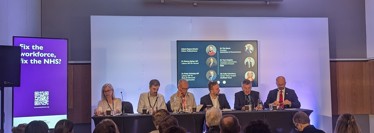
Among the meetings particularly relevant to BSH were: “Fix the Workforce, Fix the NHS?” and “The National Cancer Plan: Delivering on Ambition.”
The workforce discussion reinforced that workforce capacity and sustainability remain central to the NHS agenda and showed broad recognition that workforce challenges could not be met by small scale changes alone. The discussions also suggested that the NHS 10-Year Workforce Plan is likely to take some time to emerge, meaning that there may be a longer period of development and discussion before we see the detail of the Government’s longer-term workforce approach. This reinforces the importance of BSH continuing to make the case for haematology workforce needs and ensuring that our evidence and recommendations are well positioned to inform the emerging strategy.
The discussion also highlighted the importance of considering workforce challenges across the NHS rather than solely within individual specialties. While specialty-specific lobbying is recognised by MPs, there may be greater opportunities to work with other professional organisations around shared workforce challenges.
The National Cancer Plan meeting provided a complementary perspective, with speakers highlighting the importance of the whole cancer pathway, inequalities in access, MDT working and meaningful clinical and patient input. The new National Cancer Board was broadly welcomed, although speakers stressed the importance of clear ownership and testing its work against inequalities and quality of care.
A further theme across both meetings was the Government’s commitment to neighbourhood-based healthcare. This is an area where BSH can give greater attention to how haematology fits within emerging models of care — including the relationship between specialist services, primary care and community-based delivery, and the implications for workforce planning and access.
Plaid Cymru Conference
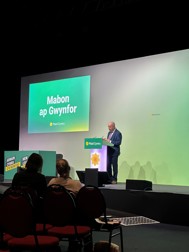
BSH also attended Plaid Cymru’s conference where discussions on workforce, cancer care and service transformation provided useful insight into the Welsh government’s emerging health priorities and potential opportunities for engagement.
A recurring theme across conference discussions was the intention to shift care closer to home through greater emphasis on prevention, community-based services and a more integrated approach to healthcare delivery. Speakers acknowledged that while the NHS workforce in Wales has grown since the pandemic, significant workforce shortages remain, particularly in specialist areas. The upcoming NHS Workforce Plan for Wales was referenced repeatedly with indication that we could expect this in just a few weeks. Ministers indicated a desire for a clinically led approach supported by stronger workforce data and continued engagement with professional bodies such as the Royal Colleges. This reinforces the importance of BSH continuing to articulate the specific workforce challenges and needs of haematology to ensure that these are reflected within future workforce planning.
Similar to discussions at Labour Conference, delegates emphasised that service transformation can only succeed if workforce considerations are addressed alongside it. As one panellist observed, ‘community by design needs a workforce by design’. Speakers highlighted the risk that moving care into community settings can increase pressures on specialist clinicians if workforce requirements are not properly recognised and resourced. Discussions on specialist outreach, advisory work and clinical support for community services echoed themes identified through BSH’s own work on liaison haematology and the often unseen contributions of specialist staff. These conversations reinforced the importance of ensuring that workforce planning reflects the full range of haematology activity, including work that may not be captured through traditional service metrics.
The forthcoming Welsh Cancer Strategy was another significant area of discussion. Speakers highlighted ambitions to improve timely access to treatment, strengthen diagnostic services, reduce inequalities and build a resilient workforce capable of supporting future demand. These priorities broadly align with BSH’s own objectives, however discussions highlighted the importance of ensuring that blood cancers and other haematological conditions are not overlooked within broader cancer policy conversations. This presents an opportunity for BSH to continue making the case for the distinct diagnostic pathways, treatment models and workforce requirements associated with haematological malignancies, and to ensure that these considerations are reflected as the strategy is developed.
As with Labour conference, discussions frequently returned to workforce sustainability as a system-wide challenge rather than an issue confined to individual specialties. Conversations with stakeholders, including professional bodies and workforce organisations, highlighted opportunities for BSH to work collaboratively with partners on shared workforce concerns while continuing to advocate for the specific needs of the haematology multidisciplinary team.
Looking ahead
Across both conferences, workforce sustainability remained one of the clearest and most consistent themes. Discussions reinforced that workforce challenges are increasingly being viewed as system-wide issues that cut across specialties, professions and care settings. This creates opportunities for BSH to continue championing the specific workforce needs of haematology whilst also working with partners on shared challenges.
The growing focus on neighbourhood healthcare and community-based models of care will be an important area for BSH to monitor. Ambitions to move care closer to home must be matched by appropriate workforce planning and investment. As policymakers continue to develop these models, BSH must consider what this means for haematology and where opportunities are to ensure the specialist workforce required to support high-quality haematology services is fully recognised and supported through these shifts.
The conferences also highlighted a number of forthcoming policy developments, including the Welsh Cancer Strategy, the National Cancer Board and future workforce planning work across both nations. We will continue to engage with these developments, drawing on member expertise and evidence to ensure that the distinct needs of haematology services, the multidisciplinary workforce and patients with blood disorders and blood cancers are reflected in emerging policy.

NHS 10-Year Workforce Plan
We are closely watching for the publication of the new 10 Year NHS Workforce Plan and will respond as soon as it is published to ensure the needs of the haematology workforce are fully reflected.
In 2025 we submitted a response to the Government’s Call for Evidence highlighting that haematology is at a critical workforce crisis point and arguing for fundamental changes in how the profession is valued, structured, and trained.
Informed by our extensive workforce research, our response was built around three core asks:
1. Accurate definition and accounting of currently invisible and unrecorded activity.
This includes ‘liaison haematology’ and the resources required for transfusions, neither of which is adequately captured in current NHS planning, despite being vital to patient safety and quality of care.
2. Restructuring of the workforce mode.
A shift from the ‘Christmas Tree’ hierarchical model to an ‘Expert Team’ approach, redistributing workload by risk and expertise, empowering specialist nurses and freeing consultants for complex cases.
3. Countering high retirement rates and enhancing retention through flexibility.
Addressing high retirement rates and reduced working hours through flexible working, protected CPD time, and alternative training pathways to sustain the future workforce.
We support the several responses of on this plan, some of which you may find below.
In June, NHS ConfedExpo 2026 brought together leaders from across health and care to discuss the future of the NHS at a pivotal moment for the service. With the 10 Year Health Plan providing the backdrop, discussions focused on how the NHS can deliver meaningful reform while responding to rising demand, financial pressures and persistent health inequalities. BSH attended a number of sessions across the two-day event with several common themes emerging.
- Reform has broad support, but delivery remains the challenge
There was widespread agreement on the need for reform, with strong support for neighbourhood health services, prevention and making better use of innovation. However, discussions were often less clear on how these ambitions would be delivered consistently across the NHS, particularly given ongoing pressures. A recurring comment was that implementation will be as important as ambition.
- Technology is increasingly viewed as a key enabler
AI, digital technologies and data featured prominently throughout the conference, with speakers highlighting opportunities to improve productivity, reduce administrative burden and support more personalised care. Alongside this optimism were important discussions around governance, transparency and public trust. It is clear that technology alone cannot deliver transformation without a workforce equipped with the skills and support to adopt it safely and effectively.
- Workforce underpins successful transformation
Although workforce was not always the primary focus of individual sessions, it consistently emerged as a critical factor in whether reform could be successfully delivered. Whether discussions centred on AI, neighbourhood health, cancer services, or reducing inequalities, workforce capacity, skills, leadership and development were recurring considerations. As the NHS embraces new technologies and models of care, ensuring the workforce is supported to develop alongside these changes will be essential.
- Neighbourhood health and reducing inequalities remains central
The ambition to deliver more care closer to home was a consistent theme, alongside renewed focus on prevention, partnership working and tackling health inequalities. Speakers highlighted the need to better understand where patients are falling out of care pathways and the need to ensure that access to diagnostics, specialist services and clinical trials is not determined by geography. Many discussions reinforced that improving population health will require both better data and sufficient workforce capacity to deliver equitable services across communities.
Overall, ConfedExpo reflected a strong appetite for reform and innovation. As the NHS moves to implement the ambitions of the 10-Year Health Plan, ensuring the workforce is supported, developed and equipped to deliver change will be fundamental to its success.
Publication of the NHS 10 Year Workforce Plan continues to be eagerly anticipated. Recent speculation and reports of leaks have prompted concern about the direction of the plan from bodies including the Royal College of Physicians, the Royal College of Nursing, the British Medical Association and others about staffing pressures, specialist training capacity and implementation risks with some calls being made for the plan to be paused and strengthened.
BSH are awaiting further detail and are ready to engage with partners as more information becomes available. We will update members through the members’ newsletter as soon as more detail is available.